
By Peter White
I was cleaning up my home office and came across a book that I read years ago – Risk Makes Sense: Human Judgement and Risk by Dr Robert Long and Joshua Long, 2nd edition.
So I started flicking through the book (as you do) and came across chapter 3 and in particular a section called “Culture: More Than Just ‘What we Do Around Here’” that got me thinking about how important it is to understand your work culture (current state) and how it was formed before attempting to make changes if you think that is required.
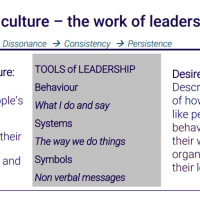
We say it’s the leadership that creates culture but it’s the culture that delivers the results (good or bad), so if you want different results then it’s up to the leadership to understand current state culture, determine what a better future state culture should looks like, then develop an action plan to move from current state culture to future state culture.
In the book, it explains culture in the context of a sense of commonality which could include:
- Common and exclusive language
- Accepted terms of reference by a group
- Clear identifiers of membership
- Common values, attitudes and beliefs
- Explicit and implicit symbols
- Shared experiences
- Social customs and social norms
- Historically transmitted ensembles of symbols
All of this makes sense and it is the culture that contributes to the risk profile of a team or organisation.
Whenever I have been asked to help change culture, I always start with a current state analysis of the culture through some of the following:
- Listen for dominant mythologies
- What people say about the systems of work they are expected to use
- What is said about the leadership, other work groups and their peers
- Look for:
- Symbols in the workplace that are seen as either positive or negative
- Systems of work that are productive or counterproductive
- Observed behaviours particularly of the leadership
- Undertake a SWOT analysis
- Review of the KPIs
- Incidents, near miss reports, and injuries
Once a current state analysis has been completed, it can be determined what is good (so you can keep doing that) and what should change/start.
And from my experience an action plan developed with contribution from the end users helps make transitioning easier. This requires thinking about how any change will be viewed by the end user so appropriate communication and consultation can be undertaken.
At LKS Quaero, we help organisations change their culture to reach the results they want to see. For more information, visit us at lksquaero.com or follow us on LinkedIn and Facebook.